Led by: Gustavo Correa (IMCN,FCEFN, Universidad Nacional de San Juan, CIGEOBIO – Departamento de Geología, FCEFN-UNSJ); Oscar Limarino (CONICET – UBA); Gonzalo García (Goldquest Mining Corp); Osvaldo Conde (IMCN,FCEFN, Universidad Nacional de San Juan, CIGEOBIO)
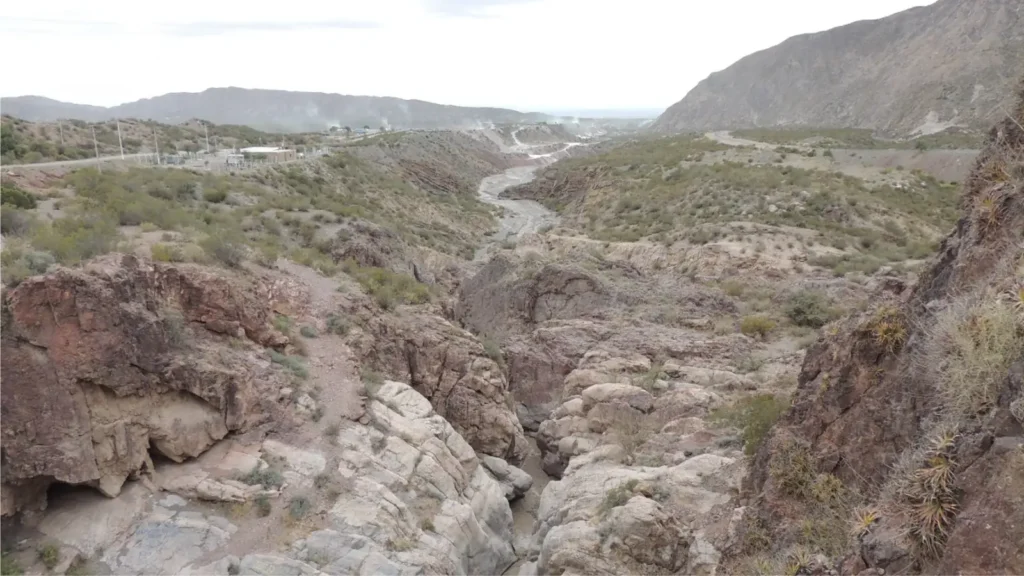
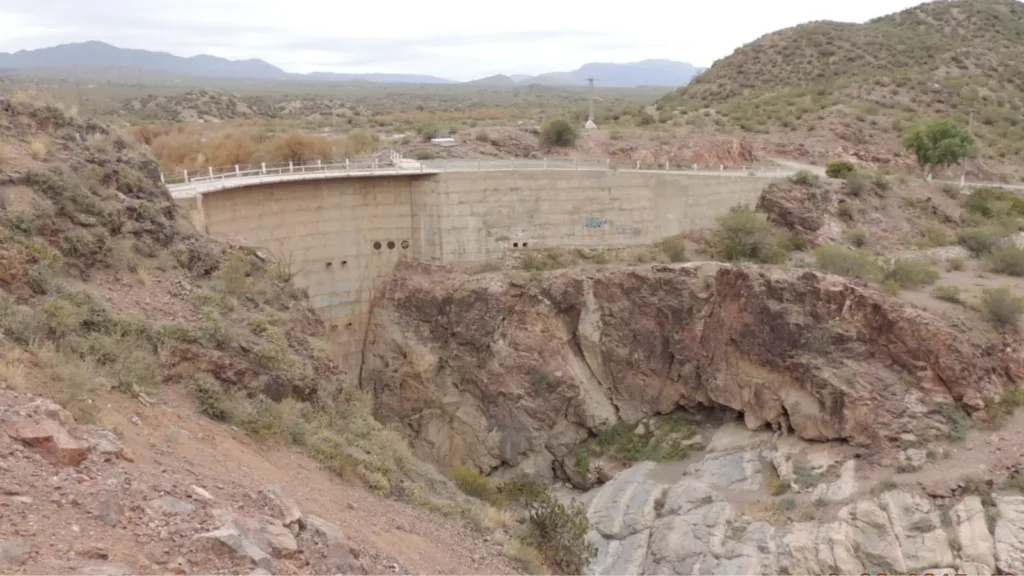
The Río del Agua ravine area, located south of the Sierra Chica de Zonda, is a foundational site for the paleontology and geology of the Argentine Carboniferous. There, at the end of the 19th century, the first Carboniferous paleofloristic locality in the country was identified, based on the pioneering studies of Ladislaus Szajnocha (1891) and Berg (1891). This fact gives the area exceptional historical and heritage value within the national geosciences, comparable to that of other classic sites in South American Gondwana. Since then, and although the site received little attention for decades, recent work demonstrates that it is a key succession for understanding the paleoenvironmental, paleoclimatic, and paleogeographic evolution of western Gondwana during the Late Carboniferous–Early Permian. The outcrops correspond to the Retamito Formation, located in the southern Paganzo Basin, Eastern Precordillera of San Juan Province. The succession records a complex and continuous sedimentary history, reflecting marked environmental variability: 1) proximal colluvial and alluvial systems (basal breccias and conglomerates); 2) coastal and shoreface environments, with episodic marine influence; 3) paralic and deltaic environments, with the development of thin carbonaceous layers; 4) anastomosing fluvial systems and coastal lagoon deposits. 5) Intercalations of short-lived transgressive marine events. This stratigraphic architecture allows us to reconstruct the transition from postglacial conditions of the Middle-Late Carboniferous to more temperate Early Permian scenarios. From an academic and scientific perspective, the Río del Agua site is exceptional because it allows us to observe, within a few meters: the first documented Carboniferous paleoflora of Argentina, well-preserved continental-paralic-marine environmental transitions, integrated biostratigraphic control (megaflora, palynology, and invertebrates), and a continuous record of the Bashkirian-Moscovian-Early Cisuralian, in a condensed succession of just a few tens of meters. This field trip proposes: 1) the revision of Neopaleozoic stratigraphy and sections of the Retamito Formation (fluvial-deltaic systems, carbonaceous banks, and marine levels); 2) Identification of postglacial architectural units and discussion of their significance in paleoenvironmental and paleoclimatic terms; 3) identification of paleoflora and invertebrate remains; 4) Panoramic view of the outcrops from the Las Crucecitas dam, context and historical assessment.
Maximum capacity: 18 participants
Date: April 24, 2027
Fee per person: U$D65