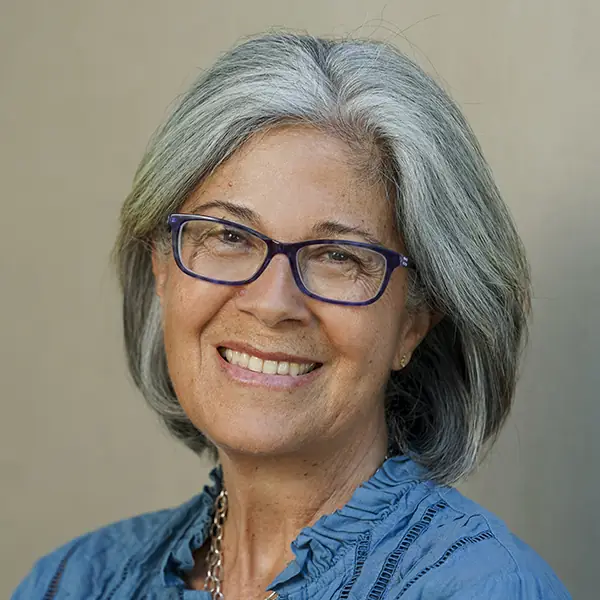
Dr. Isabel P. Montañez (University of California, United States)
Dr. Isabel Montañez is a Distinguished Professor in the Department of Earth and Planetary Sciences at the University of California, Davis. She is a recognized specialist in paleoclimatology, the carbon cycle, and climate change.
In recognition of her contributions to the Earth sciences, she is a member of the U.S. National Academy of Sciences, one of the highest honors in U.S. science.
Her research focuses on reconstructing past climates and the dynamics of the climate system during critical intervals of Earth’s history, particularly the Late Paleozoic and the Mesozoic. She has developed and applied multiproxy approaches—including isotopic geochemistry, paleosol analysis, and sedimentological studies—to quantify atmospheric CO₂ concentrations, evaluate climate sensitivity, and understand the links among tectonics, volcanism, biological evolution, and global climate. Dr. Montañez has led numerous nationally and internationally funded projects, contributing significantly to understanding Earth’s ‘icehouse’ and ‘greenhouse’ states and to contextualizing current climate change within deep-time scales. Her scientific output includes hundreds of articles in high-impact journals, and she has trained multiple generations of Earth scientists.
Her work integrates geological and climatic processes into a systemic vision of the planet, with a strong impact on contemporary debates concerning the carbon cycle and the evolution of global climate.
Abstract
Paleo-CO2 reconstructions are integral to understanding the evolution of Earth system processes and their interactions, given that atmospheric CO2 concentrations are intrinsically linked to planetary function. Past periods of major climate change, within both greenhouse and icehouse states, provide unique insights into the response of land-atmosphere-ocean interactions to warming-induced climate change, particularly for times of _p_CO2 comparable to those projected for our future. How well the past can inform the future, however, depends on how well paleo-CO2 estimates can be constrained. Although broad patterns in CO2 emerge in existing paleo-CO2 compilations, our understanding of how and why atmospheric CO2 has varied in the past remains poorly constrained due to inconsistencies between proxy estimates that lead to large CO2 ranges and widely divergent trends for many intervals. In this talk, I will first address present-day CO2 in the context of the geologic past and what it suggests about our future and then discuss approaches to and the challenges of reconstructing accurate and precise paleo-CO2 concentrations. I will then introduce a path forward that an international Consortium, CO2PIP, which I lead, is developing to advance the science of paleo-CO2 reconstruction and to build a next-generation CO2 record for the past 250 million years. Our collective efforts have included modernizing published paleo-CO2 records so that they meet modern proxy theory and developing a suite of forward proxy system models that are quantified representations of the environmental and ecological conditions and processes that govern the CO2 signal in proxies. An additional forward proxy model has been developed to constrain the carbon-isotopic composition of atmospheric CO2 through time. I will conclude by sharing the new quantitative, data-driven CO2 reconstruction for the Mesozoic and Cenozoic that is being created by the CO2PIP Consortium using statistical integration of the suite of new forward-system proxy models with all published and modernized proxy data through Bayesian inversion analysis. This work is advancing our understanding of proxy sensitivities to individual controls that affect the accuracy and precision of CO2 estimates, thus permitting major advances in the science of CO2 reconstruction.