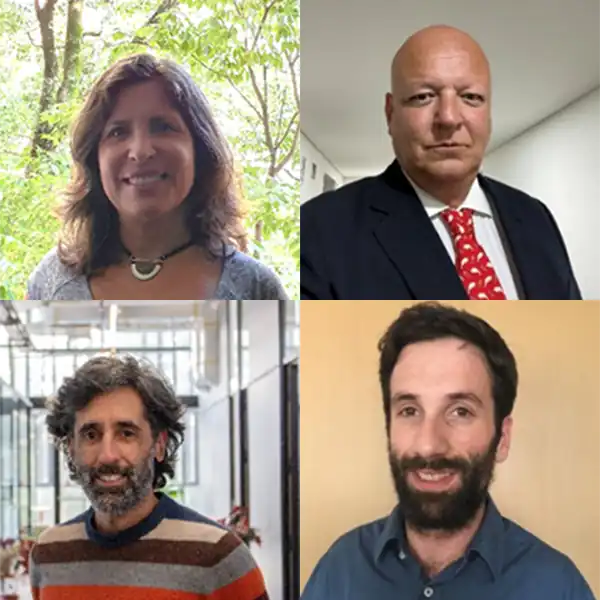
Speakers: Dra. María Gloria Mota García (Universidad de São Paulo, Brasil), Dr. Manu Monge-Ganuzas (Servicio de la Reserva de la Biosfera de Urdaibai, España), Dr. Manuel Schilling (Instituto de Ciencias de la Tierra de la Universidad Austral de Chile, Chile) y MSc. Mauricio Faraone Pimienta (Servicio Geológico de Uruguay -DINAMIGE-, Uruguay)
Geoconservation is the discipline devoted to identifying, protecting, managing, and enhancing the value of geological heritage sites and features. These are understood as the geological, geomorphological, soil, and hydrological elements that make up the natural heritage of a given territory. Its purpose is to ensure the conservation of geological sites, processes, and features of particular scientific, educational, cultural, scenic, or tourism value, while also promoting their communication and sustainable use.
This introductory course on geoconservation provides an overview of the fundamental concepts related to geodiversity and geological heritage, addressing the main threats affecting these resources and the tools available for their conservation. Throughout the course, participants will be introduced to the theoretical foundations of geoconservation, its historical development, and its integration into international nature conservation policies.
Key topics include the definition and assessment of geological heritage, inventories of Sites of Geological Interest, criteria for evaluating their scientific and social significance, and methodologies used for their management and protection. Various conservation designations will also be examined, including UNESCO Global Geoparks, protected natural areas, natural monuments, and other legal and administrative protection strategies.
The course will also explore the relationship between geoconservation and sustainable development, highlighting the role of geology in understanding natural processes, adapting to climate change, managing natural hazards, promoting environmental education, and developing geotourism. Practical examples of conservation initiatives implemented in different countries and contexts will illustrate how geodiversity can contribute to local communities’ well-being and sustainable territorial development.
Another key topic is the communication and interpretation of geological heritage. Participants will examine different tools for interpreting and communicating geological values to society, including geological trails, interpretation centres, educational materials, signage, citizen science activities, and public awareness strategies.
Finally, the course will introduce the main international organizations, programmes, and initiatives related to geoconservation, such as UNESCO, the International Union for Conservation of Nature (IUCN), and various research and conservation projects implemented at regional and global scales.
Upon completion of the course, participants will have acquired a foundation for understanding the importance of geodiversity, recognizing the values of geological heritage, and taking part in basic activities involving the inventory, protection, management, and communication of geological resources, thereby contributing to their conservation for present and future generations.
Who Is This Course For?
This course is intended for students, professionals, and anyone interested in Earth sciences, nature conservation, environmental management, and land-use planning who wishes to acquire basic knowledge of geodiversity, geological heritage, and geoconservation.
It is particularly suited to geologists, geographers, biologists, environmental scientists, environmental educators, protected natural area managers, technical staff from public administrations, nature tourism and geotourism professionals, members of conservation organizations, and undergraduate and postgraduate students in the natural and environmental sciences.
No prior specialized knowledge of geoconservation is required, although a basic background in or interest in geology, the environment, natural heritage conservation, or land management is recommended. The course provides an accessible introduction to the fundamental concepts, methodologies, and tools used to identify, assess, conserve, and communicate geodiversity and geological heritage.
The course is also suitable for anyone interested in understanding the value of geological features in nature and their contribution to sustainable development, environmental education, scientific research, and natural heritage conservation.
What Are the Requirements for Participants?
No specific prior knowledge of geoconservation, geodiversity, or geological heritage is required.
Participants are encouraged to have an interest in geology, Earth sciences, nature conservation, environmental management, or natural heritage. The course is designed as an introductory training programme and provides the basic knowledge needed to understand the fundamentals of geodiversity, geological heritage, and geoconservation.
The course is open to university students, professionals working in environment- and land management-related disciplines, public administration staff, educators, protected natural area managers, nature tourism professionals, members of conservation organizations, and anyone interested in gaining an overview of geological heritage conservation.
Previous professional experience or specialized training in geology or geoconservation is not necessary. The only requirements are an interest in natural heritage conservation and a willingness to engage with the course content.
Preferred Course Format
In person
Minimum and Maximum Number of Participants
8–20 participants
Duration
4.75 hours over one day
Fee: U$D 50